 Support us on Patreon
 PayPal
Thank you for helping to keep GamingOnLinux civil and safe!
Please tell us why you're reporting this content. Please note we store your IP address for all reports to help prevent spam and abuse. You can also email any complaints to: [email protected].
- Survive an elevator trying to eat you in co-op horror KLETKA when it releases February 19
- Draft code submitted to KDE Plasma turns it into a full VR desktop
- Proton Experimental brings updates for MonoGame, Rockstar Launcher and more
- Valve tweak Steam AI disclosure form for developers to clarify it's for content consumed by players
- No Rest for the Wicked co-op update lands on January 22 and it hit a big sales milestone
- > See more over 30 days here
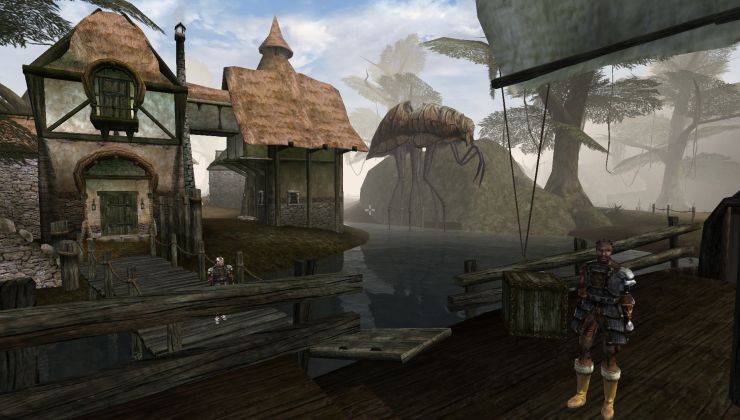 How to setup OpenMW for modern Morrowind on Linux / SteamOS and Steam Deck
 How to install Hollow Knight: Silksong mods on Linux, SteamOS and Steam Deck
- Casual/Social places for developer chatter
- simplyseven - Will you buy the new Steam Frame?
- eev - One-time logout
- Liam Dawe - Away later this week...
- Liam Dawe - Weekend Players' Club 2026-01-16
- grigi - See more posts
B. As the history of appimage and android APK's clearly displays those large players you mentioned would've loved a neatly unified approach to package distribution.
C. The third software freedom is formulated by the fsf as and I quote here: "The freedom to distribute copies of your modified versions to others (freedom 3). By doing this you can give the whole community a chance to benefit from your changes. Access to the source code is a precondition for this." Clarifying here clearly that shared by those experts you mentioned aren't only meant for themselves, but for the entire community. You might argue that only the developers qualify under the community, but that isn't how I see it used generally. Most of the time it's used to describe all users. The fsf is a group of those contributing experts. This implies that at least some of these experts don't develop it just for experts.
D. The beauty of open source is that it's the tide that lifts all boats. As such Valve indeed gets to lift on the works of others with Linux and the ecosystem. Yet, it also adds to Linux and the ecosystem by submitting its own patches. These patches add value for many beyond Valve. For these patches I'm thankful towards Valve even though they as such benefit from community support and R&D savings. They drastically improved Wine, gave KDE some neat extras, solved several driver issues and enabled equal graphics processing with Windows through their contributions to the Khronos project.
E. Your Snap analysis shows, why Flatpack has massive value for those experienced professionals. They don't want to compile their programs a billion times for a billion different distros and versions. Snap offered insufficient room for competition and customization as such faltpack was introduced.
F. Unverified flatpacks aren't half as dangerous as unverified packages(yes, you can download and install debs straight from the web), since these have full root access. Unverified is just dangerous.
Having said that:
A. You're completely right .deb/.rdp/.snap aren't going away, but they'll be brought back to the place they belong: root level system extensions like drivers, virus scanners and such. I still get shivers every time I install a game or a production program through apt and it requires root.
B. Yes, it makes malware spreading harder, because it makes software distribution generally harder. That's a bug not a feature.
C. Flathub(not Flatpack) does add a level of insecurity Linux didn't previously have. It has a pretty loose security policy. Most repos including the fedora flatpack repository require the repo maintainers to have compiled and understood the code before pushing it(canonicals snap store is an exception). Flathub doesn't. This is dangerous as Canonical has displayed with several cryptoscam wallets in their snap store.
Especially and this probably what you meant with the danger of unverified Flatpacks, because flathub does make it dangerously easy to install non-developer signed(unverified) Flatpacks. Most repos get away with providing non-developer signed packages, because they can check them for themselves. Flathub doesn't do that.