 Support us on Patreon
 PayPal
Thank you for helping to keep GamingOnLinux civil and safe!
Please tell us why you're reporting this content. Please note we store your IP address for all reports to help prevent spam and abuse. You can also email any complaints to: [email protected].
- Survive an elevator trying to eat you in co-op horror KLETKA when it releases February 19
- Draft code submitted to KDE Plasma turns it into a full VR desktop
- Proton Experimental brings updates for MonoGame, Rockstar Launcher and more
- Valve tweak Steam AI disclosure form for developers to clarify it's for content consumed by players
- No Rest for the Wicked co-op update lands on January 22 and it hit a big sales milestone
- > See more over 30 days here
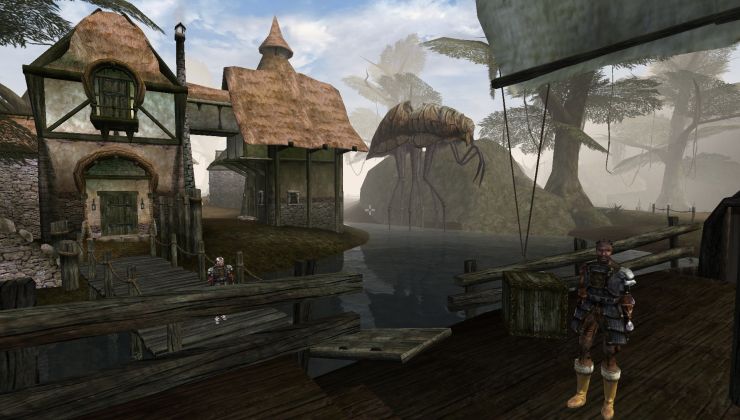 How to setup OpenMW for modern Morrowind on Linux / SteamOS and Steam Deck
 How to install Hollow Knight: Silksong mods on Linux, SteamOS and Steam Deck
- Casual/Social places for developer chatter
- simplyseven - Will you buy the new Steam Frame?
- eev - One-time logout
- Liam Dawe - Away later this week...
- Liam Dawe - Weekend Players' Club 2026-01-16
- grigi - See more posts
They're two very, very different worlds.
Linux is mostly driven by chip strength and price in the sense that every new use case for computers uses Linux by default and places new strains on vendors to support it and that computational potential is directly related to chip power.
Linux gaming is not driven by new potential, discoveries and/or research, but market politics. The fear of others drives one to free software, since if everybody is super(user) nobody is.
Valve sacrifices games for API and market access certainty.
Microsoft sacrifices customers to get stronger IP(Intellectual Property) guarantees in the wider sense.
Apple knows that anti-trust concerns only stop Microsoft from retracting killer app access as long Linux stays insignificant, so they backed the Wine project. Even fear for Linux can drive one to contribute to it, since open source lifts all boats.
Microsoft multiple times tried to sacrifice the game market to rid themselves of Intel's hold on their business.
Yet NVIDIA improves Linux not out of fear, but reward through the AI bubble.
Google throws considerable weight behind it, because of Android.
Printer vendors introduced wireless printing for mobile.
Most virus scanner support comes from the cloud.
The best example are though containerized packages(such as snap, Flatpak, etc.).
The Cloud drove demand for binary formats(packages) and saw the value of a standard(appimage), mobile drove containerization, but mostly after a direct compile and fear for sketchy games and production software drove Canonical to Snap, but nobody trusted it, which drove the community to Flatpak, which does the same, but federalized.
This's where we're now.
The next step would probably be government pressure on repos, which would drive it to decentralization(think torrenting, but with peerage based trust metrics).